

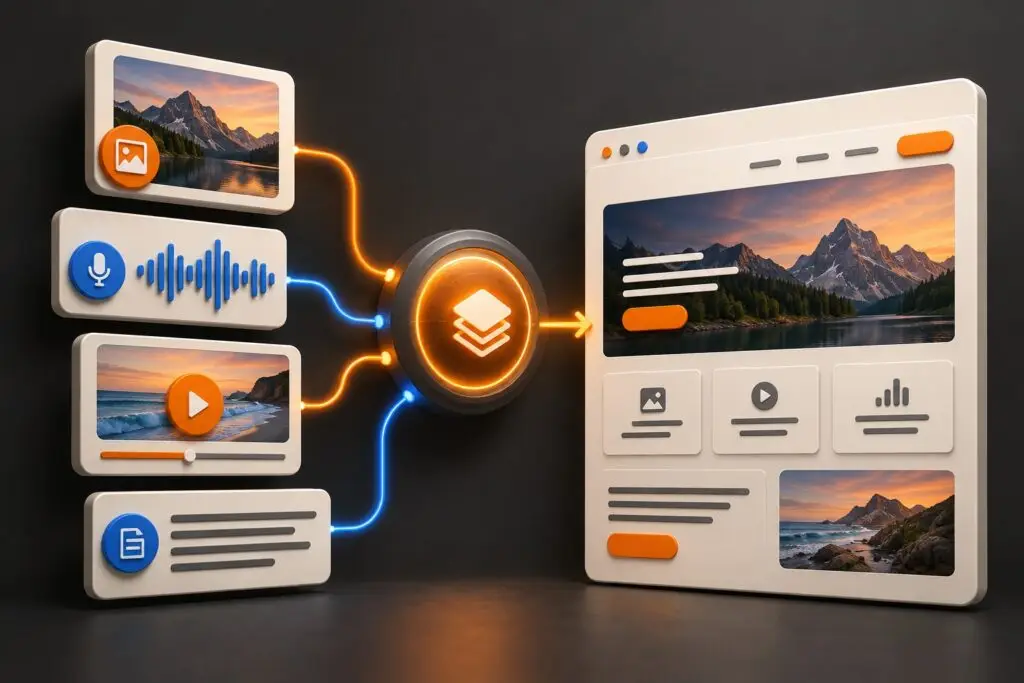
Multimodal AI – systems that understand and generate combinations of text, images, audio, and video – has moved rapidly from research labs into production tools that web designers use every day. In 2026, understanding multimodal AI is not optional for web professionals. It is reshaping how we prototype, design, communicate with clients, and build digital experiences. Here is what you need to know.
01What Is Multimodal AI?
Traditional AI models worked with one type of input – text in, text out, or image in, label out. Multimodal AI breaks those boundaries. Models like GPT-4o, Google Gemini, and Claude can now accept and produce text, images, code, audio, and video in a single conversation. A designer can upload a screenshot of a competitor’s website and ask the AI to analyze its layout, suggest improvements, and generate the corresponding HTML and CSS – all in one prompt.
02How Multimodal AI Is Changing Web Design Workflows
The most immediate impact is on the early stages of design. Designers are now using multimodal AI to rapidly generate mood boards, wireframe alternatives, and visual concepts from text descriptions – then iterating on those outputs conversationally. Tools like Midjourney, Adobe Firefly, and Stable Diffusion integrate directly into design workflows, while platforms like Figma are adding AI-assisted features that generate components, suggest layout adjustments, and flag accessibility issues in real time.
03Visual Search and Image Recognition in Web Experiences
Multimodal AI is also changing what websites can do for users. Visual search – where users upload an image to find similar products or information – has gone from a novelty to a standard feature in e-commerce. Google Lens and similar tools drive significant traffic, and optimizing images for visual search (clear subjects, descriptive alt text, structured data) has become an SEO consideration. Web designers need to build image-first experiences that account for how AI systems parse and understand visual content.
04Accessibility Improvements Powered by Multimodal AI
One of the most promising applications for web designers is AI-assisted accessibility. Multimodal models can automatically generate meaningful alt text for images, describe complex charts and graphs for screen reader users, and identify contrast and readability issues across an entire site. In 2026, tools that automate accessibility audits using computer vision are becoming standard in enterprise design systems – reducing both the manual work and the risk of compliance gaps.
05AI-Generated UI Components and Code
Perhaps the most transformative shift for web designers who also write code is AI’s growing ability to generate production-ready UI components from visual input. Describe what you want – or show the AI a reference image – and it produces React components, CSS, or Tailwind classes that match the design. While the output still requires human review and refinement, the speed improvement is dramatic. Designers who understand how to prompt and refine AI-generated code are building at speeds that were impossible just two years ago.
06What Web Designers Should Do Right Now
The designers thriving in 2026 are the ones who treat multimodal AI as a creative collaborator, not a threat. Start by integrating one AI tool into your existing workflow – whether that is using a text-to-image tool for concept exploration, an AI coding assistant for front-end work, or a multimodal model for client presentations. Develop your prompting skills: the ability to give clear, structured, context-rich prompts to an AI model is now a core design competency. And stay curious – the capabilities are evolving fast, and the designers who experiment early will define the workflows everyone else follows.
Multimodal AI is not replacing web designers. It is raising the ceiling for what a single designer can accomplish – and expanding the creative possibilities available to teams of every size.
