

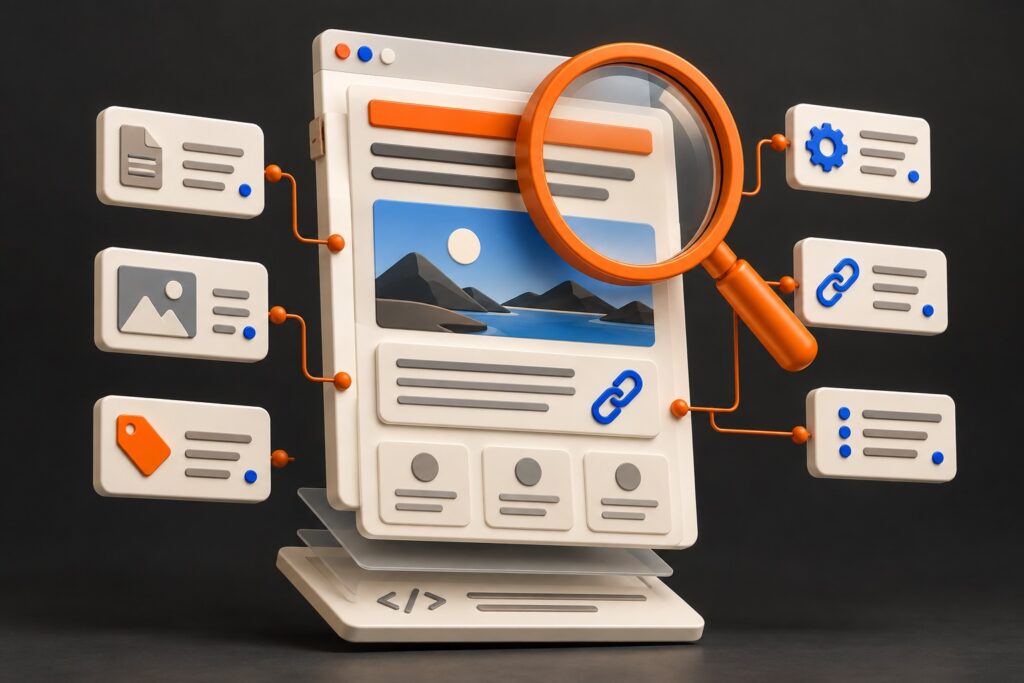
If you have ever wondered why some websites consistently appear at the top of search results while others are buried on page three, on-page SEO is a big part of the answer. On-page SEO is the practice of optimizing the content and HTML of individual web pages to rank higher and earn more relevant traffic. Unlike off-page SEO (which depends on external links), on-page SEO is entirely within your control.
01Start with Keyword Research
Every strong on-page SEO strategy starts with understanding what your audience is actually searching for. Use tools like Google Search Console, Ahrefs, or Semrush to find keywords with meaningful search volume and realistic ranking difficulty. Focus on long-tail keywords (three or more words) for new sites, as they have lower competition and more specific search intent. For example, targeting “best CRM for freelancers under $20 per month” is far more achievable than simply targeting “CRM software.”
02Optimize Your Title Tags and Meta Descriptions
Your title tag is the most important on-page SEO element. It should include your primary keyword near the beginning, be between 50 and 60 characters long, and be compelling enough to earn a click. Your meta description does not directly affect rankings, but it influences click-through rate. Write it as a short pitch (under 155 characters) that includes your keyword and gives a clear reason to click.
03Structure Your Content with Header Tags
Use one H1 tag per page (your main title), and organize the rest of your content with H2 and H3 subheadings. This helps both users and search engines understand the structure of your content. Include your target keyword naturally in the H1, and use related terms in your H2 subheadings. Well-structured content typically earns featured snippets, which can dramatically increase organic click-through rates.
04Internal Linking and Image Optimization
Link to other relevant pages on your site using descriptive anchor text. Internal links help search engines discover and index your content, and they spread ranking authority across your site. For images, always add descriptive alt text that includes relevant keywords where it makes sense. Compress images to reduce file size, and use descriptive file names instead of generic names like “image001.jpg”. These small details collectively have a meaningful impact on your overall SEO performance.
